
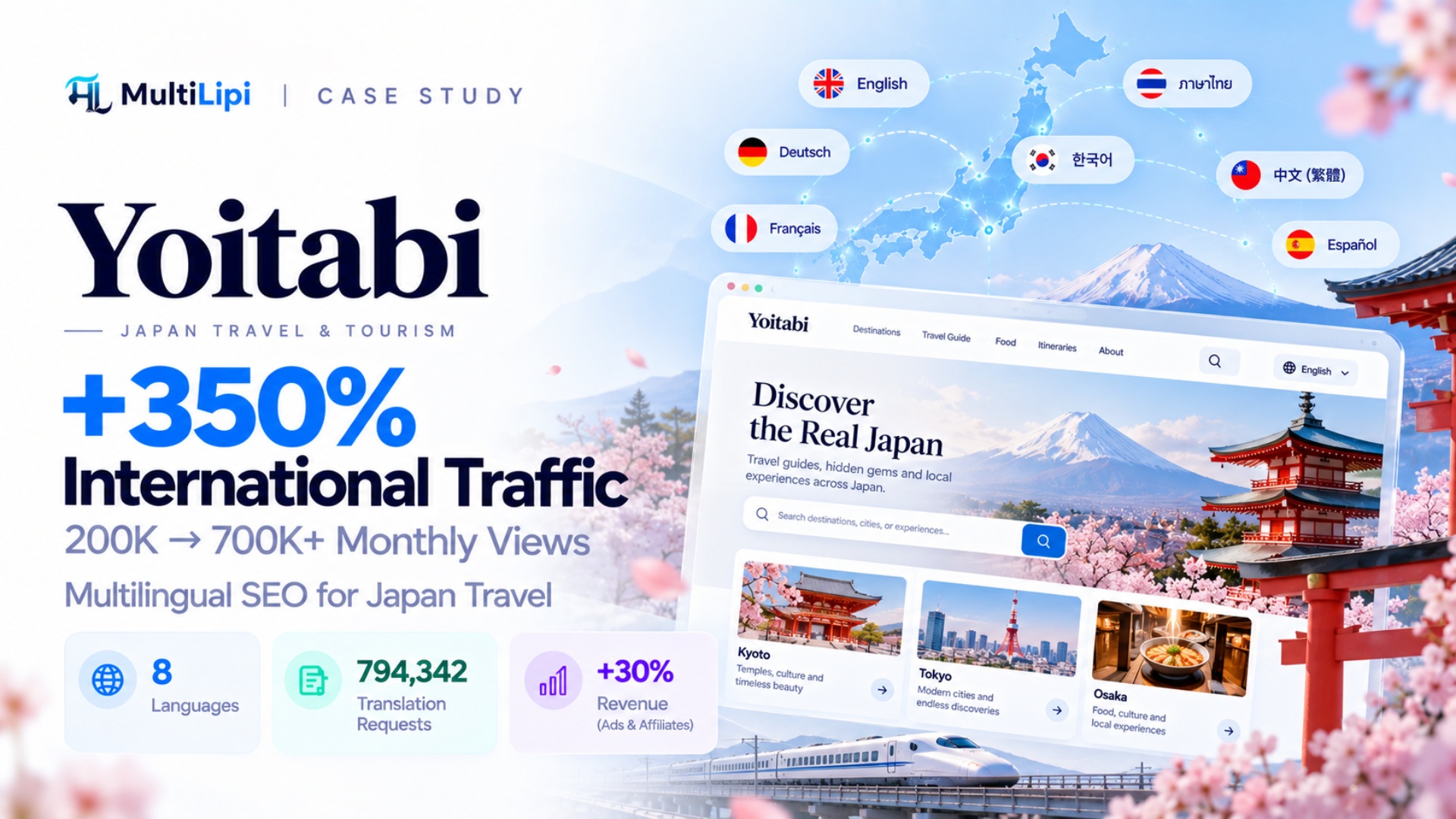
概要:観光指標
から検証された実際の成果 MultiLipi Command Center:
1. 背景:インバウンドブーム
Yoitabi (「良い旅」を意味する)は、日本のローカル旅行ストーリーを発掘することに特化した大手オンライン出版物です。円が歴史的な低水準にある中、 日本へのインバウンド観光が急増しています. 毎年何百万人もの観光客が「京都の隠れた名所」や「大阪で一番おいしいラーメン」を積極的に検索しています。
⚠️ 乖離
Yoitabiは最高のコンテンツを持っていましたが、 日本語でロック済み.
- •「旅行前」のギャップ: バンコクで検索している観光客 「日本ビザガイド」 タイ語(คู่มือวีซ่าญี่ปุ่น)では、Yoitabiの日本語記事を見つけることができませんでした。
- •収益の損失: 観光客の言語を話さないことによって 調査段階中にYoitabiは、TripAdvisorやRedditのような英語圏の競合他社に何百万もの広告インプレッションを奪われていました。
2. 課題:複雑なスクリプトのSEO
日本のサイトをタイ語、韓国語、繁体字中国語に展開することは、 独自の技術的課題.
A. 「混合スクリプト」インデックス作成の問題
アジアの言語は異なる文字セット(漢字、ハングル、タイ文字)を使用します。
B. Hreflang マトリックス
8つの言語で、相互参照は 複雑な.
rel="alternate" すべての記事にタグを付け、ドイツ語のユーザーが常に /de/ そして決して /ja/.3. 解決策:自動化された観光インフラ
Yoitabiは統合しました MultiLipiのSEOインフラ インバウンド戦略を自動化するために
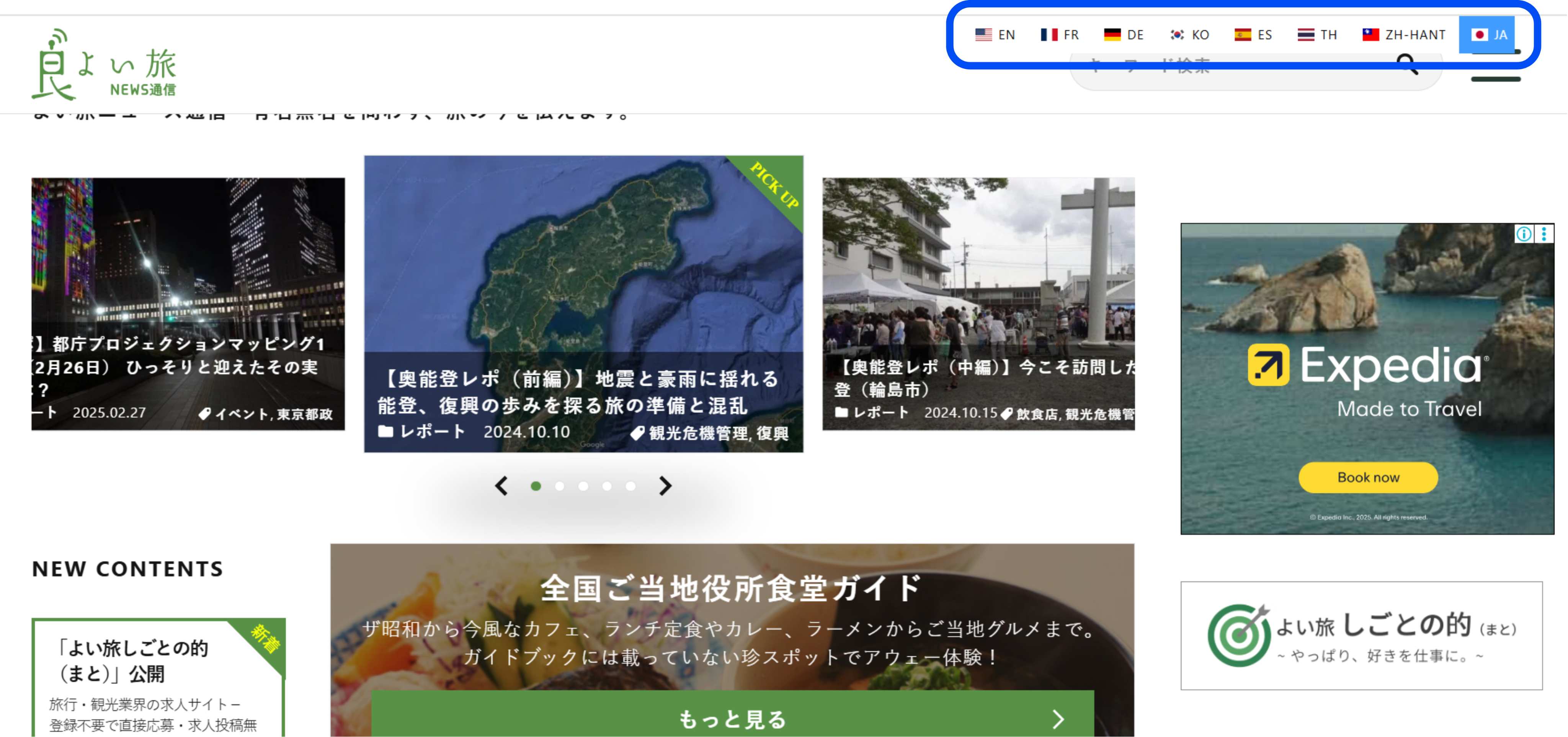
✨ 8言語の旅行ガイドを展開 — JA、EN、TH、KO、DE、FR、ZH-HANT、ES — ミックススクリプトとローカライズされたURLスラッグの完璧なUnicodeサポート付き
ステップ1:インデックス作成エンジン(サーバーサイド翻訳)
ステップ2:ローカライズされたURLスラッグ
ステップ3: 「ゼロ開発」ローンチ
4. データディープダイブ:350%の成長
その結果は、 「アジアのインバウンド」戦略.
🌐解放:タイと韓国の回廊
トラフィックの内訳は、最大の機会が 地域の隣国西洋人だけでなく。
タイ語(106,617ビュー) 大規模なトラフィックドライバーになりました。
タイからの観光客は日本で最も急速に成長しているセグメントの1つであり、Yoitabiはこの波を完璧に捉えました。
韓国語(103,030ビュー) トラフィックはローカライゼーションが勝利することを証明しました。
詳細でローカライズされたコンテンツを提供することは、一般的な旅行アグリゲーターよりも常に優れています。
ドイツ語(100,604ビュー) 高額を費やすヨーロッパの旅行者が文化ガイドを深く掘り下げていることを示しました。
英語 (196k ビュー) 世界中の旅行者にサービスを提供するトップ言語であり続けました。
💰 メトリック: 収益 30% リフト
トラフィックが増えれば、広告在庫も増えます。
📈 794,342 件の翻訳リクエスト
約 80万件の翻訳リクエスト 数千もの旅行ガイドをカバーしています。
5. 将来性:次の飛躍(GEO)
このケーススタディが真に印象的なのは、 これらの結果は、従来のSEOのみで達成されました.
まだGEOさえ有効にしていません
Yoitabiは、 350%のトラフィックリフト ガイドを8つの言語でGoogleが読めるようにしただけで。
本格的に取り組んだら、その可能性は計り知れません。
現在、彼らはGoogle検索で勝利しています。しかし、MultiLipiによってすでに旅行データが構造化されているため、有効にする準備が整っています LLM最適化. これにより、彼らの「トップ10」リストや旅程がデータエンティティに構造化され、旅行者がAIエージェントに質問した際に引用される権威となることができます。 「タイの家族向けの東京での5日間の旅程を計画してください。」
Yoitabiは検索戦争に勝ちました。彼らはすでにAI旅行戦争の準備ができています。
Yoitabiは、コンテンツこそが究極の輸出品であることを証明しました。MultiLipiを使用してガイドを8言語でインデックス化することにより、読者を350%増やし、急成長するアジアの観光市場を捉えました。彼らは単語を翻訳しただけではなく、日本の文化を輸出しました。